

What is the Single Report?
The Single Report is an annual reporting obligation through which companies provide information relating to their social and employment activity. It is submitted electronically and brings together a broad range of information concerning both the company and its employees.
It is a particularly demanding obligation due to the variety of information involved. In addition to details about the company and its employees, it includes information relating, among other matters, to employment contracts, workplace accidents and professional training.
This helps to explain why preparing the Single Report continues to represent a significant administrative workload for many organisations.
What could change with automation?
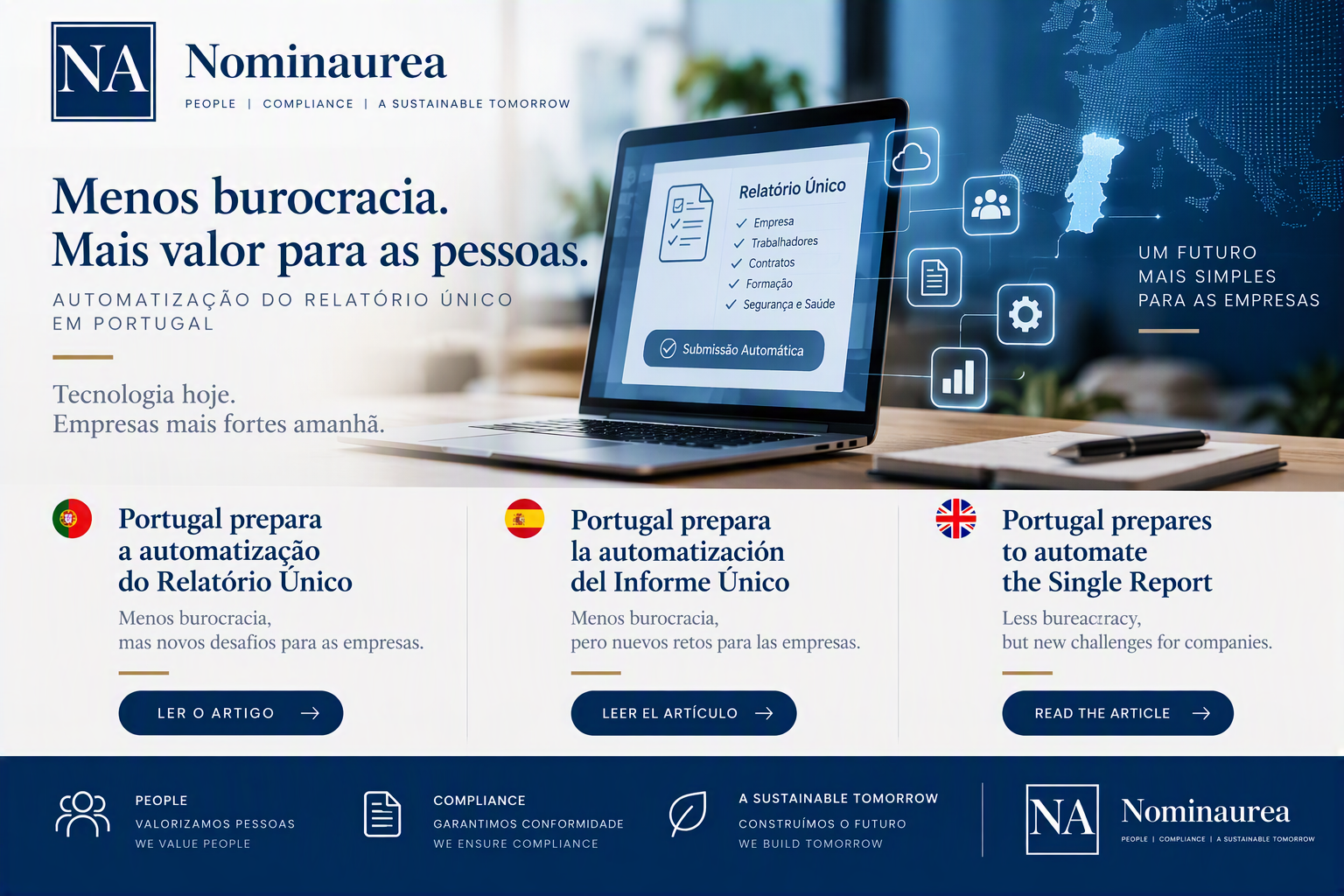
The objective is to digitalise and automate the process as far as possible, enabling information to reach public administration systems through software, automation mechanisms and interoperability solutions.
In practice, this represents an important shift in approach. Instead of repeatedly collecting, checking and manually entering information, the intention is to move towards an ecosystem in which different systems can communicate with each other.
There is, however, an important distinction to be made: the automation project is currently being developed, but the information available does not yet establish a definitive timetable for the implementation of a fully automated Single Report.
Companies should therefore not interpret this announcement as meaning the immediate end of the current reporting obligations or procedures.
Less manual work does not mean less responsibility
Automation can reduce bureaucracy, duplication of tasks and administrative workload. However, it also raises an important issue: if systems begin to obtain information directly from existing databases, the quality of the underlying data becomes critical.
For example, data relating to employees, employment relationships, remuneration, contracts, professional training and other employment-related information will need to be properly organised and consistent. This is a practical consequence that companies should anticipate, even before all the technical details of the future model are known.
Furthermore, this move towards greater automation is not happening in isolation. The social security contribution cycle is also undergoing simplification, with the new model based on greater automation of contribution-related obligations. According to the information announced, the new contribution cycle will become mandatory from January 2027.
The direction of travel is therefore clear: less repetitive data entry, greater integration between systems and increasing use of information that is already available digitally.
An opportunity to review internal processes
Companies should view this development not only as a technological change, but also as an opportunity to review the way employment and HR information is managed internally.
Preparation for a more automated model can begin by:
- improving the quality and accuracy of employee data;
- reviewing the consistency of information held in payroll and Human Resources systems;
- identifying incomplete fields or outdated information;
- strengthening internal validation procedures;
- monitoring developments in the systems used by the company and their adaptation to future interoperability requirements.
The greater the level of automation, the more important it becomes to ensure that information is correct at source. An automated process can reduce repetitive tasks, but it cannot replace the need to ensure that the data feeding that process is accurate.
Conclusion
The future automation of the Single Report could represent an important development in the digital relationship between companies and the Public Administration in Portugal.
Reducing manual work will naturally be an advantage. However, the real transformation will be the move from a model based on the periodic collection and entry of information towards one increasingly based on integration, interoperability and the reuse of data.
For companies, this is a good time to start reviewing their internal processes. Digitalisation can simplify compliance, but it also increases the importance of data quality, consistency and continuous updating.
How can Nominaurea help?
At Nominaurea, we support companies in managing their employment-related obligations, payroll processing and Human Resources, helping to ensure that the information required to meet their legal obligations is properly organised and kept up to date.
With reporting obligations becoming increasingly digital and automated, we can support our clients in reviewing employment and payroll data, identifying potential inconsistencies and preparing their internal processes for new requirements, while also monitoring the changes as they are introduced.
Automation will change processes. Preparation must begin with the quality of the information.