

Imagine receiving a message informing you that you have an outstanding tax debt and must pay it immediately through a link. The combination of urgency, authority and an alleged financial problem is precisely what makes many of these scams effective.
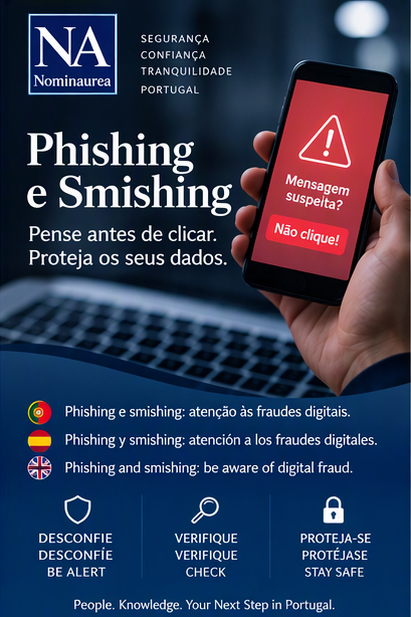
Phishing generally uses fraudulent emails, while smishing relies on SMS messages. In both cases, the objective may be to persuade the recipient to enter login credentials, disclose personal or banking information, or make a payment through a fraudulent website.
There are several warning signs to look out for: unexpected requests, threats of immediate consequences, suspicious sender addresses and, above all, links asking you to enter or confirm personal information.
Suspicious tax-related communications should always be checked directly through the Portuguese Portal das Finanças. Official guidance makes clear that taxpayers should be cautious of messages containing links that request personal, tax or banking information.
For businesses, the issue deserves additional attention. An employee deceived by an apparently legitimate message could inadvertently expose login credentials or financial information. Raising awareness among employees should therefore form part of a company’s internal security procedures.
Conclusion
When faced with an unexpected tax-related message, stopping before clicking remains one of the best forms of protection. Instead of following the link received, access the official portal directly and check whether there is actually an outstanding obligation.
How can Nominaurea help?
Nominaurea can help clients confirm whether tax obligations are genuine and interpret tax notices and communications, reducing the risk of decisions being made on the basis of fraudulent or misleading messages.