

Portugal modernises its VAT Periodic Return
The digital transformation of the Portuguese Tax Authority continues to progress, and the VAT Periodic Return is one of the clearest examples of this evolution.
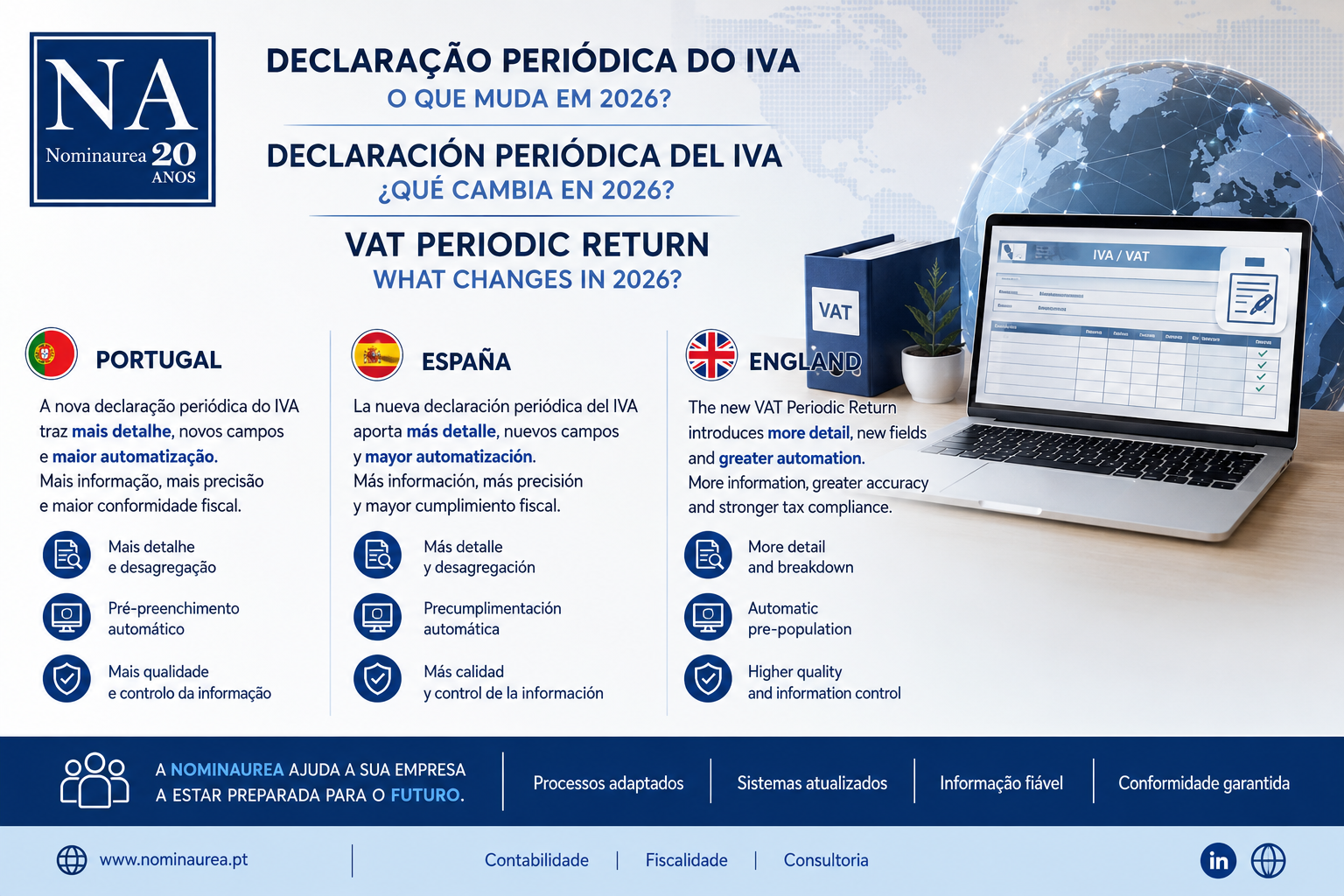
The new model represents far more than a simple redesign of the form. Its structure has been reworked to provide a more accurate identification of taxable transactions, facilitate automated cross-checking of information, and improve the reliability of the data submitted.
In practice, businesses will be required to provide more detailed information, enabling the Portuguese Tax Authority to automatically validate a greater proportion of the data reported.
What are the main changes?
The most significant changes include:
- A more detailed breakdown of the VAT return sections.
- New fields to identify different categories of transactions.
- Revised annexes relating to adjustments reported in Boxes 40 and 41.
- An updated Annex R.
- New official completion guidelines.
- Criteria for the automatic pre-completion of specific transactions.
- Improved identification of the taxable amount and the corresponding VAT.
This new structure allows the information submitted to be more consistent and easier for the Portuguese Tax Authority’s systems to validate automatically.
Why have these changes been introduced?
The main objective is to improve the quality of tax information while reflecting the legislative developments introduced over recent years.
By receiving more detailed information, the Portuguese Tax Authority can:
- reduce inconsistencies in VAT returns;
- strengthen compliance controls;
- increase the automation of tax processes;
- improve the quality of pre-completed information;
- reduce the number of corrections and requests for clarification.
For businesses, this means ensuring that accounting and invoicing systems correctly classify every transaction from the outset.
The growing importance of high-quality accounting data
With a more detailed VAT return, even small classification errors may directly affect the information reported.
Businesses should therefore ensure that:
- transactions are correctly classified for VAT purposes;
- VAT rates are properly configured within their systems;
- VAT adjustments are fully documented;
- accounting systems have been updated to reflect the new reporting requirements.
The higher the quality of accounting information, the lower the risk of future discrepancies.
Impact on accounting and business software
The changes also require accounting and invoicing software providers to update their solutions.
Businesses should verify that:
- they are using the latest software versions;
- their tax reporting modules reflect the new VAT return format;
- system configurations include the new reporting fields;
- employees responsible for VAT compliance understand the new reporting requirements.
Technological readiness will play a key role in avoiding errors when submitting future VAT returns.
Early preparation makes all the difference
Although many businesses will only experience the impact when submitting their first VAT return under the new model, preparation should begin well in advance.
It is advisable to review internal procedures, accounting configurations and tax reporting controls before the first filing deadline.
The earlier any weaknesses are identified, the lower the likelihood of filing errors or having to submit amended VAT returns.
Conclusion
The new VAT Periodic Return represents another important step in the digital transformation of Portugal’s tax system.
While it requires businesses to provide more detailed information, the new model aims to create a more transparent, automated and efficient reporting framework that benefits both the Portuguese Tax Authority and taxpayers maintaining accurate and well-organised accounting records.
For businesses, this is an excellent opportunity to review internal procedures, modernise accounting systems and strengthen tax compliance processes to ensure full compliance with the latest legal requirements.
How Nominaurea can help
At Nominaurea – Tax Consultancy & Accounting, we continuously monitor legislative and tax developments in Portugal to ensure our clients remain fully compliant with the latest requirements.
Our team of Certified Accountants supports businesses in adapting their accounting procedures, reviewing accounting system configurations, validating tax information and preparing VAT Periodic Returns, helping to minimise risk while ensuring full compliance with Portuguese tax legislation.